7 Get gene sets
Gene sets and statistical methods are central parts for gene enrichment analysis (GEA).
To facilitate GEA, I developed the package geneset, which provides a comprehensive list of monthly updated gene set (GS) libraries.
7.1 Geneset package introduction
The R package includes curated gene sets from GO (BP, CC and MF), KEGG (pathway, module, enzyme, network, drug and disease), WikiPathway, MsigDb, EnrichrDb, Reactome, MeSH, DisGeNET, Disease Ontology (DO), Network of Cancer Gene (NCG) (version 6 and v7) and COVID-19.
It supports both model and non-model species.
For more details, please refer to this site.
- GO supports 143 species
- KEGG supports 8213 species
- MeSH supports 71 species
- MsigDb supports 20 species
- WikiPathway supports 16 species
- Reactome supports 11 species
- EnrichrDB supports 5 species
- Disease-related sets only support human (DO, NCG, DisGeNET and COVID-19)
7.2 Get GO geneset
7.2.1 GO introduction
According to Wikipedia, “Ontologies consist of detectable or directly observable representations of things and the relationships between those things.”
GO is short for Gene Ontology. GO analysis aims to find the associations between gene products and GO terms, which has three domains:
- Biological Processes (BP)
- A biological process represents a specific objective that the organism is genetically programmed to achieve.
- Molecular Functions (MF)
- A molecular process that can be carried out by the action of a single macromolecular machine, usually via direct physical interactions with other molecular entities.
- Cellular Components (CC)
- A location, relative to cellular compartments and structures, occupied by a macromolecular machine when it carries out a molecular function.
GO terms are organized in a directed acyclic graph with a parent-child relationship.
For a more comprehensive introduction to GO, you may visit: https://advaitabio.com/faq-items/understanding-gene-ontology/ OR http://geneontology.org/docs/ontology-documentation/
7.2.2 Usage
The arguments include:
- org: organism name
- ont: choose from “bp”, “mf” and “cc”
The result is a list that includes four parts:
-
gene set(formatted as a data frame): two columns containing GO term IDs and matched gene IDs -
geneset_name(formatted as a data frame): two columns containing GO term IDs and matched GO descriptions -
organism: storesorginformation -
type: storesontinformation
## List of 4
##  $ geneset     :'data.frame':    279100 obs. of  2 variables:
##   ..$ id  : chr [1:279100] "GO:0000009" "GO:0000009" "GO:0000009" "GO:0000014" ...
##   ..$ gene: chr [1:279100] "PIGV" "ALG12" "ALG2" "ERCC1" ...
##  $ geneset_name:'data.frame':    5134 obs. of  2 variables:
##   ..$ id  : chr [1:5134] "GO:0000009" "GO:0000014" "GO:0000016" "GO:0000026" ...
##   ..$ name: chr [1:5134] "alpha-1,6-mannosyltransferase activity" "single-stranded DNA endodeoxyribonuclease activity" "lactase activity" "alpha-1,2-mannosyltransferase activity" ...
##  $ organism    : chr "hsapiens"
##  $ type        : chr "mf"
7.3 Get KEGG geneset
7.3.1 KEGG introduction
KEGG is short for “Kyoto Encyclopedia of Genes and Genomes,” a collection of databases dealing with genomes, biological pathways, diseases, drugs, and chemical substances.
The pathway maps are classified into the following sections:
- Metabolism
- Genetic information processing (transcription, translation, replication and repair, etc.)
- Environmental information processing (membrane transport, signal transduction, etc.)
- Cellular processes (cell growth, cell death, cell membrane functions, etc.)
- Organismal systems (immune system, endocrine system, nervous system, etc.)
- Human diseases
- Drug development
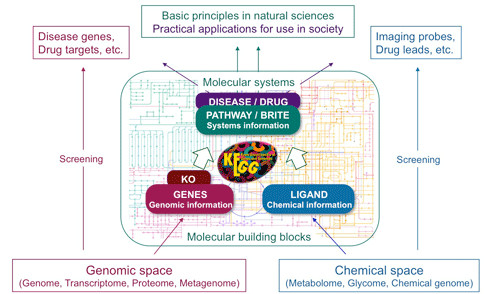
Figure 7.1: KEGG overview. Figure taken from https://paintomics.readthedocs.io/en/stable/1_kegg/.
7.3.2 Usage
The arguments include:
- org: organism name (e.g. “hsa”)
- category: choose from “pathway”, “module”, “enzyme”, “disease” (human only), “drug” (human only) or “network” (human only)
## List of 4
##  $ geneset     :'data.frame':    39562 obs. of  2 variables:
##   ..$ id  : chr [1:39562] "hsa00010" "hsa00010" "hsa00010" "hsa00010" ...
##   ..$ gene: chr [1:39562] "10327" "124" "125" "126" ...
##  $ geneset_name:'data.frame':    587 obs. of  2 variables:
##   ..$ id  : chr [1:587] "hsa01100" "hsa01110" "hsa01120" "hsa01200" ...
##   ..$ name: chr [1:587] "Metabolic pathways" "Biosynthesis of secondary metabolites" "Microbial metabolism in diverse environments" "Carbon metabolism" ...
##  $ organism    : chr "hsapiens"
##  $ type        : chr "kegg"
7.4 Get MeSH geneset
7.4.1 MeSH introduction
Medical Subject Headings is a comprehensive controlled vocabulary for the purpose of indexing journal articles and books in the life sciences. It serves as a thesaurus that facilitates searching.
7.4.2 Usage
The arguments include:
- org: organism name (e.g. “human”)
- method: method of mapping MeSH ID to gene ID. Choose one from “gendoo”, “gene2pubmed” or “RBBH” (mainly for some minor species).
- category: MeSH descriptor categories. For more details, refer to: How to use MeSH-related Packages
## List of 4
##  $ geneset     :'data.frame':    3031273 obs. of  2 variables:
##   ..$ id  : chr [1:3031273] "D000001" "D000001" "D000001" "D000001" ...
##   ..$ gene: chr [1:3031273] "100" "10016" "1003" "10076" ...
##  $ geneset_name:'data.frame':    30194 obs. of  2 variables:
##   ..$ id  : chr [1:30194] "D000001" "D000002" "D000003" "D000004" ...
##   ..$ name: chr [1:30194] "Calcimycin" "Temefos" "Abattoirs" "Abbreviations as Topic" ...
##  $ organism    : chr "hsapiens"
##  $ type        : chr "mesh"
7.5 Get MsigDB geneset
7.5.1 MsigDB introduction
MsigDB categories is the best GSEA partner, which has 9 major collections and several sub-collections comprising 32880 gene sets:
- H: hallmark gene sets (50 gene sets)
- C1: positional gene sets (299 gene sets)
- by chromosome: chr1 => MT
- C2: curated gene sets (6366 gene sets)
- CGP (chemical and genetic perturbations, 3384 gene sets)
- CP (canonical pathways, 2982 gene sets) includes BioCarta, KEGG, PID, Reactome and WikiPathways
- C3: regulatory target gene sets (3726 gene sets)
- MIR (microRNA targets, 2598 gene sets)
- TFT (all transcription factor targets, 1128 gene sets)
- C4: computational gene sets (858 gene sets)
- CGN (cancer gene neighborhoods, 427 gene sets)
- CM (cancer modules, 431 gene sets)
- C5: ontology gene sets (15473 gene sets) includes BP, CC and MF
- C6: oncogenic signature gene sets (189 gene sets)
- C7: immunologic signature gene sets (5219 gene sets)
- IMMUNESIGDB (ImmuneSigDB gene sets, 4872 gene sets)
- VAX (vaccine response gene sets, 347 gene sets)
- C8: cell type signature gene sets (700 gene sets)
7.5.2 Usage
The arguments include:
- org: organism name (e.g. “human”)
- category: choose from “H”, “C1”, “C2-CGP”, “C2-CP-BIOCARTA”, “C2-CP-KEGG”, “C2-CP-PID”,
“C2-CP-REACTOME”, “C2-CP-WIKIPATHWAYS”, “C3-MIR-MIRDB”, “C3-MIR-MIR_Legacy”, “C3-TFT-GTRD”,
“C3-TFT-TFT_Legacy”, “C4-CGN”, “C4-CM”, “C5-GO-BP”, “C5-GO-CC”, “C5-GO-MF”, “C5-HPO”, “C6”,
“C7-IMMUNESIGDB”, “C7-VAX”, “C8”
The result is a list that includes four parts:
-
gene set(formatted as a data frame): two columns containing pathway IDs and matched gene IDs -
geneset_name: NA (because the pathway IDs and names are the same, so we simply ignore them) -
organism: storesorginformation -
type: storesontinformation
## List of 4
##  $ geneset     :'data.frame':    7331 obs. of  2 variables:
##   ..$ gs_name    : chr [1:7331] "HALLMARK_ADIPOGENESIS" "HALLMARK_ADIPOGENESIS" "HALLMARK_ADIPOGENESIS" "HALLMARK_ADIPOGENESIS" ...
##   ..$ entrez_gene: chr [1:7331] "19" "11194" "10449" "33" ...
##  $ geneset_name: logi NA
##  $ organism    : chr "hsapiens"
##  $ type        : chr "msigdb"
7.6 Get WikiPathways geneset
7.6.1 WikiPathways introduction
WikiPathways was established to facilitate the contribution and maintenance of pathway information by the biology community. Each month, it produces a set of pathways as .gmt files on https://wikipathways-data.wmcloud.org/.
7.6.2 Usage
You only need to input the organism name.
## List of 4
##  $ geneset     :'data.frame':    40242 obs. of  2 variables:
##   ..$ id  : chr [1:40242] "WP100" "WP100" "WP100" "WP100" ...
##   ..$ gene: chr [1:40242] "2687" "2678" "2876" "2936" ...
##  $ geneset_name:'data.frame':    987 obs. of  2 variables:
##   ..$ id  : chr [1:987] "WP100" "WP106" "WP107" "WP111" ...
##   ..$ name: chr [1:987] "Glutathione metabolism" "Alanine and aspartate metabolism" "Translation factors" "Electron transport chain OXPHOS system in mitochondria" ...
##  $ organism    : chr "hsapiens"
##  $ type        : chr "wikipathway"
7.7 Get Reactome geneset
7.7.2 Usage
You only need to input the organism name.
gs <- getReactome(org = "human")
str(gs)
## List of 4
## $ geneset :'data.frame': 142676 obs. of 2 variables:
## ..$ id : chr [1:142676] "R-HSA-1059683" "R-HSA-1059683" "R-HSA-1059683" "R-HSA-1059683" ...
## ..$ gene: chr [1:142676] "3569" "3570" "3572" "3716" ...
## $ geneset_name:'data.frame': 2866 obs. of 2 variables:
## ..$ id : chr [1:2866] "R-HSA-1059683" "R-HSA-109581" "R-HSA-109582" "R-HSA-109606" ...
## ..$ name: chr [1:2866] "Interleukin-6 signaling" "Apoptosis" "Hemostasis" "Intrinsic Pathway for Apoptosis" ...
## $ organism : chr "hsapiens"
## $ type : chr "reactome"7.8 Get Enrichr geneset
7.8.1 Enrichr introduction
Enrichr is a comprehensive resource of curated gene sets and a search engine that accumulates biological knowledge for further biological discoveries.
7.8.2 Usage
The arguments include:
- org: organism name (e.g. “human”)
- library: choose one library name from geneset::enrichr_metadata (e.g. “COVID-19_Related_Gene_Sets”)
gs <- getEnrichrdb(org = "human", library = "COVID-19_Related_Gene_Sets")
str(gs)
## List of 4
## $ geneset :'data.frame': 60289 obs. of 2 variables:
## ..$ id : Factor w/ 205 levels "COVID19-E protein host PPI from Krogan",..: 1 1 1 1 1 1 2 2 2 2 ...
## ..$ gene: chr [1:60289] "BRD4" "BRD2" "SLC44A2" "ZC3H18" ...
## $ geneset_name: logi NA
## $ organism : chr "hsapiens"
## $ type : chr "enrichrdb"7.9 Get human disease-related geneset
For now, we support human disease annotation data from: Disease Ontology (DO), DisGeNET, Network of Cancer Gene (NCG) version 6 and v7, and COVID-19
You only need to input the source name from “do”, “ncg_v7”, “ncg_v6”, “disgenet” and “covid19”.
do: The Disease Ontology has been developed as a standardized ontology for human disease, with the purpose of providing the biomedical community with consistent, reusable and sustainable descriptions of human disease terms.ncg_v7 & ncg_v6: Human Network of Cancer Gene (NCG) is a manually curated collection of cancer genes, healthy drivers and their properties.disgenet: DisGeNET is a discovery platform containing one of the largest publicly available collections of genes and variants associated with human diseases. DisGeNET integrates data from expert curated repositories, GWAS catalogues, animal models and the scientific literature. DisGeNET data are homogeneously annotated with controlled vocabularies and community-driven ontologies. Additionally, several original metrics are provided to assist in the prioritization of genotype-phenotype relationships.covid19: The COVID-19 Drug and Gene Set Library. A collection of drug and gene sets related to COVID-19 research contributed by the community.
gs <- getHgDisease(source = "do")
str(gs)
## List of 4
## $ geneset :'data.frame': 387300 obs. of 2 variables:
## ..$ id : chr [1:387300] "DOID:0001816" "DOID:0001816" "DOID:0001816" "DOID:0001816" ...
## ..$ gene: chr [1:387300] "238" "672" "675" "387119" ...
## $ geneset_name:'data.frame': 11878 obs. of 2 variables:
## ..$ id : chr [1:11878] "DOID:0001816" "DOID:0002116" "DOID:0014667" "DOID:0040001" ...
## ..$ name: chr [1:11878] "Angiosarcoma" "Pterygium" "Disease of metabolism" "Shrimp allergy" ...
## $ organism : chr "hsapiens"
## $ type : chr "do"